Affiliate disclosure: This article contains affiliate links. If you buy through them, we may earn a commission at no extra cost to you. That does not change our evidence-based assessment. We do not accept payment for positive reviews, and we do not guarantee results.
Pilgrim Hair Growth Serum Review: 7 Essential Facts, Great Price & Results
Quick verdict: Pilgrim Hair Growth Serum Review
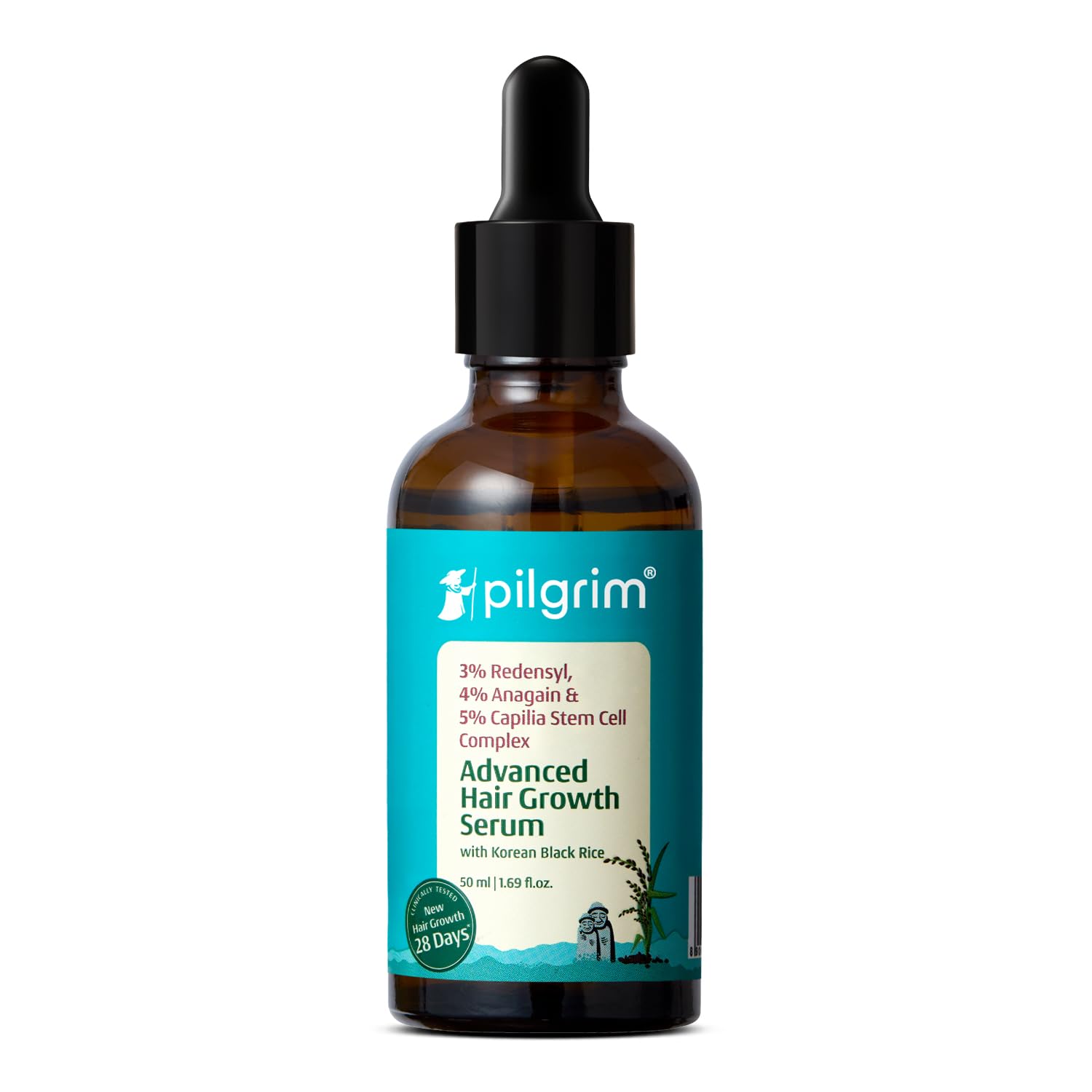
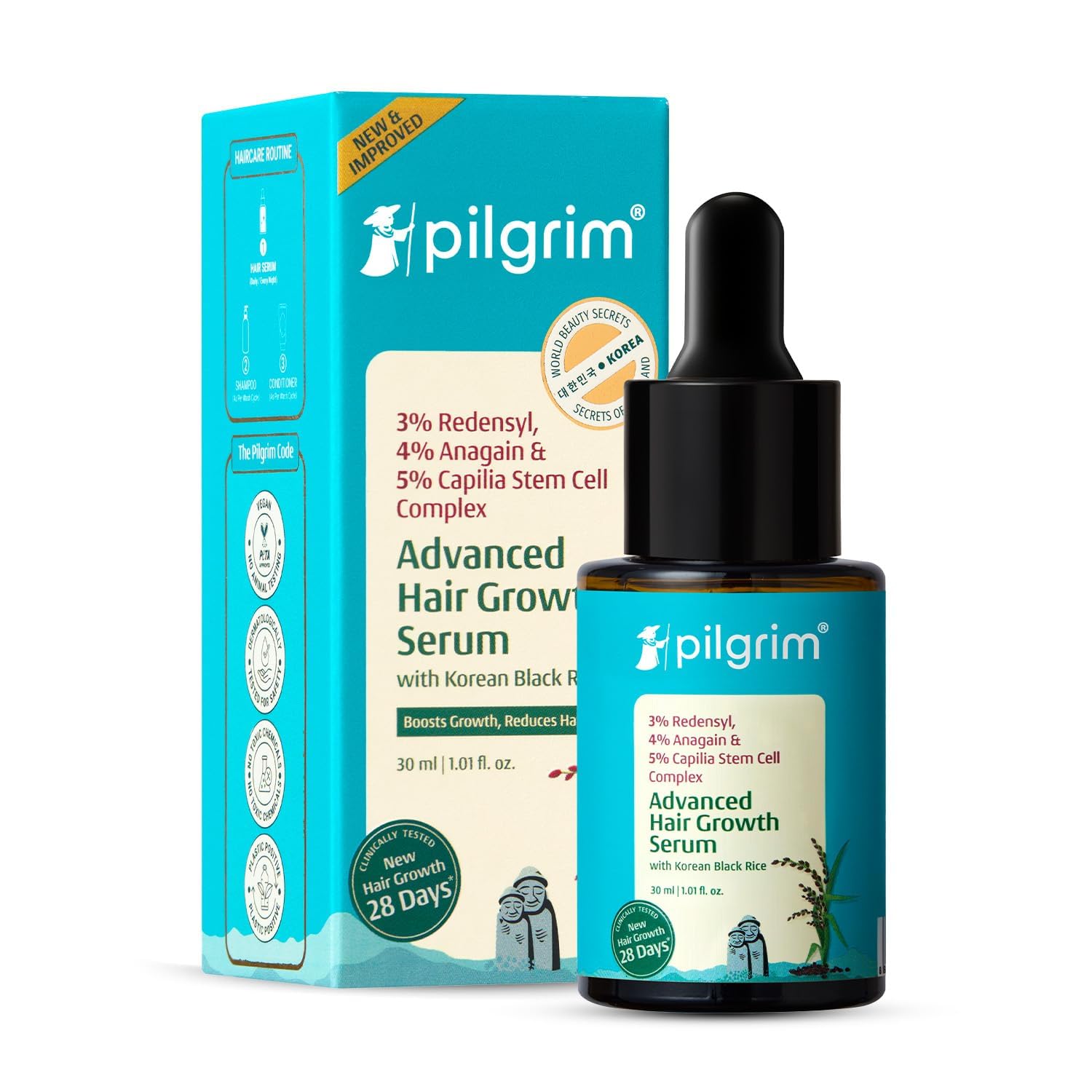
Pilgrim Advanced Hair Growth Serum is a lightweight, mid-priced leave-in scalp serum built around 3% Redensyl, 4% AnaGain, and supporting botanical ingredients. It is one of India’s better-known Redensyl serums, and many users report that it absorbs quickly and reduces the feel of shedding with consistent use.
The catch is evidence quality. Pilgrim’s “new growth in 28 days” claim comes from a small, brand-reported study of 32 people—encouraging, but not the same as large independent clinical trials. The exact formula has limited independent published evidence, and it is not a medicine. For early thinning or reactive shedding, it is a reasonable cosmetic adjunct. For pattern hair loss or sudden, patchy loss, a dermatologist and treatments such as minoxidil have stronger evidence.
- Best for: early thinning, mild shedding, and people who want a non-greasy leave-in serum and understand that results take months.
- Skip if: you have severe, scarring, sudden, or patchy hair loss; you are pregnant or breastfeeding without medical advice; or you expect a 28-day cure.
- Verify before buying: current price and pack size, full ingredient list, patch-test tolerance, and whether an underlying medical cause needs investigation.
What the Pilgrim Hair Growth Serum Review covers
Pilgrim Hair Growth Serum Review is the focus of this independent, evidence-aware guide. Here is the short answer before the details: this is a cosmetic, leave-in scalp serum sold in 30 ml, 50 ml, and 100 ml sizes in India. The core marketing story combines 3% Redensyl and 4% AnaGain, usually alongside Korean black rice extract, rosemary, and—in some variants—5% Capilia stem cell complex. The brand positions it for men and women with hair fall, thinning, and reduced density.
It is not a drug, not a prescription treatment, and not a cure for hair loss. It is best understood as a supportive cosmetic step that sits between ordinary conditioner and medical treatment. That distinction matters because hair loss has many causes: genetics, iron or thyroid problems, telogen effluvium after illness or stress, traction, hormonal changes, and scarring conditions. A serum can support scalp condition, but it cannot diagnose or reverse every cause.
Pilgrim Hair Growth Serum Review: ingredients and what they do
Ingredient lists vary slightly by pack and variant, so always check the label on the exact bottle you buy. Here is the honest breakdown of the main actives.
| Ingredient | Amount / role | What the evidence reasonably supports |
|---|---|---|
| Redensyl | 3% — patented blend targeting follicle stem cells | Some clinical data suggests it can improve hair density and reduce shedding. It is not equivalent to 5% minoxidil, and product-specific evidence for Pilgrim’s exact base is limited. |
| AnaGain | 4% — pea sprout extract | Clinical studies on AnaGain suggest reduced hair loss and improved anagen-to-telogen ratio. Again, those are ingredient-level studies, not proof that every finished product performs the same way. |
| Capilia stem cell complex | 5% in some variants — plant stem cell blend | Marketed to support follicle activity. Independent published evidence on this specific blend in a finished consumer serum is limited. |
| Korean black rice, rosemary | Supporting botanical extracts | Antioxidant and conditioning support. Rosemary has some traditional and limited clinical interest, but it is not a replacement for evidence-backed medical treatment. |
| Biotin, caffeine, niacinamide, hyaluronic acid | Supporting cosmetic ingredients in some variants | Biotin only helps if you are genuinely deficient; caffeine and niacinamide may support scalp comfort. These are not standalone proven growth cures. |
The formula is free of parabens, sulfates, and mineral oil, according to the brand, and is described as cruelty-free. Those are reasonable cosmetic positives. They do not, by themselves, prove efficacy.
Evidence: what the studies do and do not show
Pilgrim says its serum is “clinically tested to show new hair growth in just 28 days,” based on a study of 32 males and females with hair loss. The brand also notes that individual results vary by age, gender, and underlying conditions. That is a small, brand-commissioned study. It is not meaningless, but it is not the kind of large, independent, peer-reviewed trial that would justify a blanket claim.
Ingredient-level evidence is more interesting. Redensyl has several studies behind it, and AnaGain has clinical data suggesting reduced shedding and improved hair-cycle ratios. But there is an important nuance: a 2026 randomized, double-blinded trial in Indian adults found that a 3% Redensyl serum improved hair parameters from baseline, yet was inferior to an Indulekha Bringha scalp serum on anagen density and hair-fall reduction. That trial was industry-funded by Hindustan Unilever, so it should not be treated as the final word either. The fair conclusion is that Redensyl is a plausible cosmetic active—not the strongest option on the shelf. You can read the published trial in the International Journal of Research in Dermatology.
Pilgrim Hair Growth Serum price and cost per month
Prices in India move with discounts and pack size. At the time of writing, the 30 ml bottle is commonly listed in the ₹499–₹795 range depending on the variant and seller, a 50 ml pack has been listed around ₹796, and a 100 ml pack around ₹1,479 against a higher MRP. Always verify the live price, seller, and pack size before buying—serum pricing is volatile.
| Pack | Typical observed price | Approximate cost per ml | Practical note |
|---|---|---|---|
| 30 ml | ₹499–₹795 | ≈₹16.6–₹26.5/ml | Good trial size; may last roughly 4–6 weeks with daily use. |
| 50 ml | ≈₹796 | ≈₹15.9/ml | Better value per ml if you already know you tolerate it. |
| 100 ml | ≈₹1,479 | ≈₹14.8/ml | Lowest cost per ml, but only sensible if you will use it consistently. |
Compared with generic topical minoxidil, which can cost roughly ₹250–₹800 per month in India depending on formulation and seller, Pilgrim is not the cheapest option. But minoxidil is a medicine with a different evidence base and different side-effect profile. The comparison is not apples to apples.
Pros, cons, and suitability
Genuine strengths
- Lightweight and non-sticky texture. Multiple user reviews describe it as fast-absorbing and comfortable for daily use, which matters for adherence.
- Accessible mid-price positioning. It sits within reach of many Indian consumers and is widely available online and in pharmacies.
- Sensible multi-active formula. Redensyl plus AnaGain is a more defensible cosmetic combination than a single botanical extract.
- Cosmetic elegance. Free from parabens, sulfates, and mineral oil; cruelty-free.
Important limitations
- Product-specific evidence is limited. The 28-day claim rests on a small brand-reported study, not a large independent trial.
- Not a treatment for pattern baldness. It will not replace minoxidil or prescription therapy where those are indicated.
- Results take time and vary. Realistic assessment is 3–4 months, not 28 days.
- Possible scalp irritation. Some users report itching; patch-test first, especially with sensitive skin.
- Ingredient transparency could be better. Some reviews note that a full INCI list is not always easy to find for every variant.
Who may reasonably consider it: adults with early, mild-to-moderate thinning or reactive shedding who want a well-tolerated leave-in cosmetic serum and are willing to use it consistently for several months. Who may prefer something else: people with moderate-to-severe pattern hair loss, sudden or patchy loss, scalp disease, pregnancy, or a history of sensitivity to botanical extracts. Those situations deserve a dermatologist’s input before spending on any serum. Our guide on when to see a dermatologist for hair loss explains the red flags.
How to use the serum sensibly
- Patch test first. Apply a small amount behind the ear or on a tiny scalp area and wait 24–48 hours. If you develop redness, itching, or swelling, stop.
- Use on a clean, dry scalp. Part the hair and apply directly to the scalp in thinning areas, not just to the strands.
- Massage gently. Use fingertips—not nails—to distribute. There is no need to scrub.
- Leave it in. Do not rinse. Most leave-in serums are designed for overnight or daily wear.
- Do not layer multiple irritating actives at once. If you also use minoxidil or exfoliating scalp products, ask a dermatologist how to sequence them.
- Give it 3–4 months. Hair cycles are slow. Take photos in consistent lighting every 4 weeks rather than judging daily.
Pilgrim Hair Growth Serum Review vs minoxidil and other serums
| Option | Main active | Evidence strength | Best suited to |
|---|---|---|---|
| Pilgrim Advanced Hair Growth Serum | 3% Redensyl + 4% AnaGain + botanicals | Moderate ingredient-level evidence; limited product-specific independent data | Early thinning, mild shedding, cosmetic support |
| Topical minoxidil 5% | Minoxidil | Strongest evidence among topical options; medicine | Pattern hair loss; requires correct use and patience |
| Indulekha Bringha scalp serum | Bhringaraj-based botanical blend | One industry-funded RCT showed superiority to 3% Redensyl on some parameters | People who prefer an Ayurvedic-style serum |
| Other Redensyl/AnaGain serums | Similar actives, different bases | Varies; usually limited independent product data | Price and texture comparisons; patch-test each |
If you are choosing between Pilgrim and minoxidil, do not treat them as equals. Minoxidil is a medicine with stronger evidence and more potential side effects. Pilgrim is a cosmetic serum with a gentler risk profile and weaker proof. The right choice depends on why you are losing hair and what your dermatologist recommends. For a deeper comparison, read our guide on minoxidil vs Redensyl and our roundup of the best hair growth serums in India.
Side effects and safety
Most users tolerate the serum well, but cosmetic serums are not risk-free. Reported issues include itching, redness, and scalp irritation, especially in people with sensitive skin. The brand and pharmacy listings recommend a patch test and advise discontinuing if rash, redness, or itching occurs; it is for external use only and should be kept away from the eyes.
Do not use it as a substitute for medical care if you have sudden hair loss, patchy loss, scaling, pain, or signs of scarring. Pregnancy and breastfeeding safety is not established for every ingredient, so ask your clinician before starting. And never stop a prescribed hair-loss medicine without professional guidance.
FAQs
Does Pilgrim Hair Growth Serum Review confirm that the product really works?
No single review can confirm that. This Pilgrim Hair Growth Serum Review found a plausible active-ingredient story and brand-reported results, but independent published evidence on this exact finished product is limited. Some users see reduced shedding and improved texture; others see little change. It is a cosmetic adjunct, not a guaranteed growth treatment.
How long does Pilgrim Hair Growth Serum take to show results?
The brand claims 28 days. A more realistic assessment window is 3 to 4 months, because hair growth cycles are slow and early changes are subtle. Take consistent photos rather than judging daily.
Is Pilgrim Hair Growth Serum better than minoxidil?
No. Minoxidil 5% has stronger clinical evidence and is a recognized medical treatment for pattern hair loss. Pilgrim is a cosmetic serum with a gentler profile and weaker product-specific evidence. They are not interchangeable.
Can I use Pilgrim serum with minoxidil?
Possibly, but ask a dermatologist first. Layering actives can increase irritation, and the order of application matters. Do not experiment on a sensitive scalp without professional guidance.
Is it safe during pregnancy or breastfeeding?
There is not enough publicly available safety data for every ingredient in every variant. Consult your obstetrician or dermatologist before use. If they advise against it, follow their guidance.
Does it work for a receding hairline?
A receding hairline is often driven by pattern hair loss, which usually needs medical treatment. A cosmetic serum may support scalp condition, but it is unlikely to reverse significant recession on its own.
Is the serum sticky?
Most user reviews describe it as lightweight and fast-absorbing, but texture is personal. If you have an oily scalp, apply sparingly and patch-test.
What is the Pilgrim Hair Growth Serum price in India?
Observed listings range from roughly ₹499–₹795 for 30 ml, around ₹796 for 50 ml, and around ₹1,479 for 100 ml. Prices change frequently, so check the live listing before buying.
Final verdict: Pilgrim Hair Growth Serum Review
Pilgrim Hair Growth Serum is a reasonable mid-priced cosmetic option for early, mild hair shedding—not a miracle cure and not a replacement for medical treatment. Its strongest features are its lightweight texture, accessible price, and a multi-active formula built around Redensyl and AnaGain. Its biggest weakness is evidence: the 28-day growth claim comes from a small brand-reported study, and independent product-specific data are thin.
If you have early thinning and want a non-greasy leave-in serum to support your routine, it is worth considering—provided you patch-test, give it three to four months, and keep your expectations realistic. If you have moderate-to-severe pattern loss, sudden shedding, or scalp symptoms, see a dermatologist first and ask about minoxidil or other evidence-based options. Either way, verify the current price and pack size, because the value calculation changes quickly with discounts. Our Indulekha Bringha serum review is a useful comparison if you want an Ayurvedic-style alternative.
Medical disclaimer
This article is for general information only and is not medical advice, diagnosis, or treatment. Hair loss can have underlying medical causes. Always consult a qualified dermatologist or physician before starting, stopping, or combining hair-loss treatments. Do not use this article to delay professional care.
References and verification notes
- Pilgrim official hair-serum collection page: brand claim of clinical testing and the 32-participant, 28-day study; individual-results caveat.
- Shukla RK, Madhavi MSL, Gudulkar S, Mathur S, Punyani S. Comparative efficacy of topical hair growth serums on hair density and shedding: a double-blinded and randomized clinical trial. Int J Res Dermatol. 2026. Read the trial.
- American Academy of Dermatology: Hair loss resource — evidence-based overview of causes and treatments.
- Independent product review noting the ₹795 price point, ingredient limitations, and full-INCI transparency concerns: sskin.care.
- Apollo Pharmacy listing with safety information: external use only, patch test, discontinue if irritation occurs: apollopharmacy.in.
Verification note: Prices and pack sizes were observed at the time of writing and can change. The 28-day claim is treated as brand-reported, not independently verified. No firsthand product testing, laboratory analysis, or medical review was conducted for this draft unless a named reviewer is added above.
About the Author