An evidence-based comparison of OTC shampoos, prescription treatments, and “natural” products—plus the one step that causes most lice treatments to fail.
Quick Verdict (TL;DR)
What works best depends on your child’s age, whether this is a first infestation, and local resistance patterns.
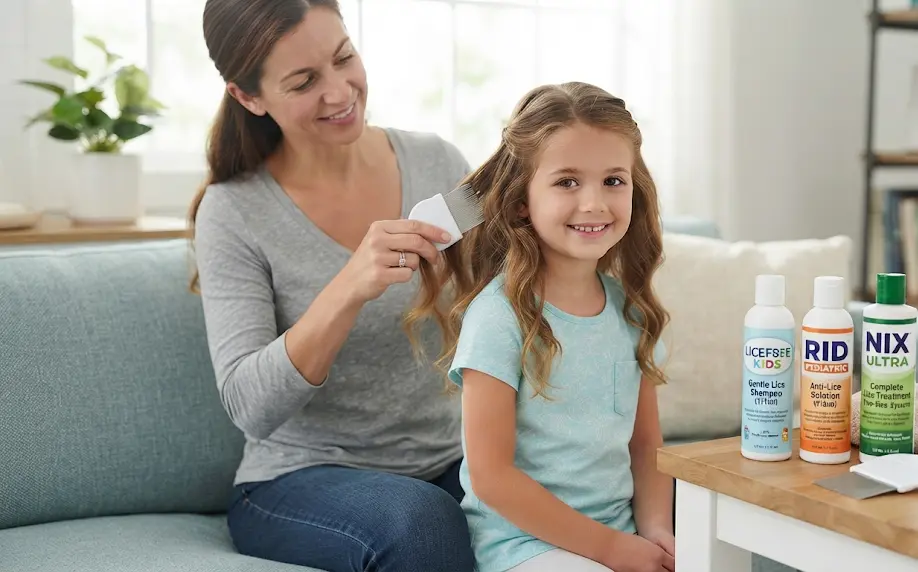
- First-line OTC option: Permethrin 1% lotion (e.g., Nix) is approved for children 2 months and older and remains the standard first try, though resistance is increasingly reported.
- Pyrethrin-based shampoos (e.g., Rid) are approved for 2 years and older but are not safe for children with ragweed or chrysanthemum allergies.
- Prescription alternatives (spinosad, ivermectin lotion, benzyl alcohol) are options when OTC treatment fails; some are approved for infants as young as 6 months.
- “Natural” or Ayurvedic anti-lice shampoos sold on Amazon India (neem, tea tree, camphor) have limited independent clinical evidence and mixed customer reviews; they should not replace proven treatments without pediatric guidance.
- The most skipped step: Most OTC products do not kill eggs. A second treatment 7–10 days later is essential, along with manual nit combing.
Who this is for: Parents in the U.S. and India managing a child’s active head lice infestation and comparing treatment options.
Affiliate Disclosure
This article may contain affiliate links. If you purchase a product through a link on this page, we may earn a commission at no extra cost to you. We do not recommend products solely because of affiliate relationships. Treatment recommendations are based on published clinical guidance from the CDC, AAP, and FDA-approved product information. Always consult your child’s pediatrician before treating lice, especially for children under 2 years old or with skin conditions.
Introduction: Why Lice Feel Like a Parenting Emergency (and What to Do First)
It starts with a note from school. Or a scratch behind the ear that won’t stop. Within minutes, you’re parting hair under a bright light, heart sinking as you spot tiny sesame-seed specks clinging to the hair shaft near the nape of your child’s neck.
Head lice are common, treatable, and not a sign of poor hygiene—but that knowledge doesn’t make the discovery any less stressful. The internet offers a blur of conflicting advice: drugstore shampoos, “natural” neem oils, mayonnaise home remedies, and $200 professional nit-picking services. Meanwhile, your child is itchy, you’re exhausted, and you need a plan that actually works.
This guide cuts through the noise. We’ll walk through what the CDC and American Academy of Pediatrics actually recommend, which anti-lice shampoos have real evidence behind them, what the age restrictions are, and where “natural” products fit (or don’t). We’ll also show you the single step that causes most treatment failures—skipping the second round.
Before you buy anything: Check your child’s scalp carefully. Live lice are tan-to-gray, about the size of a sesame seed, and move fast. Nits (eggs) are tiny oval casings glued to hair shafts, usually within ¼ inch of the scalp. If you’re unsure, ask a pharmacist or pediatrician to confirm before treating.
Reading on Google? Select our site as a preferred source to see more of our health guides in eligible Google features.
How We Evaluated Anti-Lice Options
We prioritized the following criteria, weighted by what matters for children’s safety:
| Criterion | Why It Matters |
|---|---|
| FDA approval and age indication | Children’s skin and body weight differ; an “adult” product can be unsafe for a toddler |
| Evidence for killing live lice | Clinical guidance from CDC/AAP and prescribing information |
| Ovicidal activity (kills eggs?) | Products that don’t kill eggs require a second treatment—critical for planning |
| Resistance considerations | Permethrin/pyrethrin resistance is documented; may affect first-choice decisions |
| Safety warnings and contraindications | Allergies (ragweed/chrysanthemum), skin irritation, flammability (malathion) |
| Practicality for parents | Application time, combing requirements, cost, availability |
What we did NOT do: We did not claim to have personally tested these products. Customer reviews cited are from Amazon/Flipkart listings and are labeled as such. “Natural” products are discussed as unproven adjuncts, not replacements for evidence-based treatment.
OTC Anti-Lice Shampoos: What the Evidence Says
Permethrin 1% Lotion (e.g., Nix)
How it works: A synthetic pyrethroid that attacks lice nervous systems. Kills live lice but not unhatched eggs.
Age: Approved for children 2 months and older.
The resistance problem: Lice have developed resistance to permethrin in many regions. If lice are still active 8–12 hours after treatment, the product may not be working for your child’s infestation. A study cited in dermatology literature found widespread genetic mutations associated with resistance in lice samples.
Retreatment: Day 9 (to kill newly hatched lice before they lay eggs).
Practical note: Do not use conditioner or combination shampoo/conditioner before applying lice medication—it can reduce effectiveness.
Pyrethrin Shampoos (e.g., Rid, A-200, Pronto)
How it works: Natural extracts from chrysanthemum flowers. Kills live lice, not eggs.
Age: Approved for 2 years and older.
Critical allergy warning: Do not use if your child is allergic to ragweed or chrysanthemums.
Retreatment: 9–10 days after first treatment.
Dimethicone-Based Products (Non-Insecticide)
How they work: Silicone polymers that physically coat and suffocate lice. Because the mechanism is physical rather than neurological, resistance is not expected.
Evidence: Some research has documented high efficacy, and they sidestep the resistance problem. However, not all dimethicone products are FDA-approved as lice treatments, and formulations vary.
Practical note: These are often marketed as “non-toxic” alternatives. They still require thorough application and combing.
Prescription Options When OTC Fails
If two rounds of an appropriately used OTC product fail, or if your child is under 2 months old (permethrin is the minimum-age OTC option), a pediatrician may prescribe:
| Prescription | Age | Kills Eggs? | Key Notes |
|---|---|---|---|
| Spinosad 0.9% suspension (Natroba) | 6 months+ | Yes | Often one application; no nit combing required |
| Ivermectin 0.5% lotion (Sklice) | 6 months+ | No (but prevents nymph survival) | Single application; do not retreat without doctor guidance |
| Benzyl alcohol 5% lotion (Ulesfia) | 6 months+ | No | Suffocates lice; can irritate skin; retreat day 7 |
| Malathion 0.5% lotion | 6 years+ | Partial | Flammable—no hair dryers, curling irons, or smoking near treated hair |
Comparison Table: OTC vs. Prescription vs. “Natural” Products
| Option | Active Ingredient | Age Minimum | Kills Eggs? | Retreatment? | Key Safety Concern | Evidence Level |
|---|---|---|---|---|---|---|
| Permethrin 1% | Permethrin (synthetic pyrethroid) | 2 months | No | Day 9 | Resistance possible | Strong (FDA-approved, CDC/AAP first-line) |
| Pyrethrin shampoo | Pyrethrins + piperonyl butoxide | 2 years | No | 9–10 days | Ragweed/chrysanthemum allergy | Strong (FDA-approved) |
| Dimethicone | Silicone polymer | Varies by product | Some formulations | Varies | Physical mechanism; no resistance expected | Moderate (studies support efficacy; not all FDA-approved as lice drugs) |
| Spinosad (Rx) | Spinosad | 6 months | Yes | Only if live lice persist day 7 | Prescription required | Strong (FDA-approved) |
| Ivermectin lotion (Rx) | Ivermectin | 6 months | No (prevents nymphs) | Not without doctor | Prescription required | Strong (FDA-approved) |
| Ayurvedic/“natural” anti-lice shampoos (neem, tea tree, camphor) | Neem, tea tree, camphor, coconut oil | Varies (often “kids”) | Not clinically established | Unknown | No standardized dosing; mixed reviews; unproven efficacy | Weak/insufficient |
Safety and Age Restrictions Every Parent Must Know
Before applying any lice product:
- Check the age on the label. Permethrin: 2 months. Pyrethrins: 2 years. Malathion: 6 years. Do not guess.
- Ask about allergies. Ragweed or chrysanthemum allergy = no pyrethrins.
- Do not use conditioner before treatment. It creates a barrier that reduces efficacy.
- Do not rewash hair for 1–2 days after treatment (for most products).
- If your child is under 6 months old: The AAP recommends manual removal with a fine-tooth comb rather than medication unless directed by a doctor.
- Stop if irritation occurs. Remove the product and call your pediatrician.
- Never use fumigant sprays or fogs—they can be toxic if inhaled.
When to call the doctor
- Your baby is under 6 months old with lice
- OTC treatment fails after two proper rounds
- Your child has a known allergy to lice treatments
- You see signs of skin infection (sores, redness, pus) from scratching
- Itching persists without visible lice
The Step Most Parents Skip (and Why Treatment “Fails”)
Here is the single most important thing to understand: Most OTC lice shampoos kill crawling lice but leave eggs behind.
Eggs hatch in 7–10 days. If you treat only once, the eggs survive, hatch, and your child is reinfested before you realize it. This is why parents say “the shampoo didn’t work”—it worked on the lice that were alive, but not on the eggs that hadn’t hatched yet.
The fix: Retreat on the schedule your product specifies (usually day 9 for permethrin, days 9–10 for pyrethrins). Between treatments, comb out nits daily with a fine-tooth metal lice comb. Wet the hair with conditioner to make combing easier and more effective.
Spinosad (prescription) is an exception—it kills eggs, so retreatment is often unnecessary. But it requires a prescription.
Frequently Asked Questions
Which anti-lice shampoo is safest for a 1-year-old?
Permethrin 1% is approved for children as young as 2 months and is the standard first-line option for toddlers. Pyrethrin shampoos require the child to be at least 2 years old and are unsafe if there is a ragweed/chrysanthemum allergy. For infants under 6 months, the AAP recommends combing alone unless a doctor advises otherwise.
Do I really need to treat again after the first wash?
Yes, for most products. Permethrin, pyrethrins, and benzyl alcohol do not kill eggs. A second treatment 7–10 days after the first is required to kill newly hatched lice before they can lay new eggs. Skipping this step is the most common reason treatment appears to fail.
Are neem or tea tree oil shampoos effective for lice?
There is insufficient high-quality clinical evidence that neem, tea tree, or camphor-based shampoos reliably eliminate head lice. Some products may temporarily stun or repel lice, but they are not FDA-approved lice treatments. Customer reviews on Amazon India are mixed, with some parents reporting success and others reporting complete failure. If you choose to try one, do not delay proven treatment—especially if your child is very young or highly symptomatic.
Can my child go to school with lice?
Yes. The CDC and AAP both advise against “no-nit” policies. Children with head lice do not need to be sent home early from school. Once treatment begins at home, they can return to class. Nits may remain on hair after successful treatment—this does not mean the child is still infested.
What if the shampoo doesn’t work?
If live, active lice are still present 8–12 hours after treatment, the product may not be working for your child’s infestation. Do not immediately reapply the same medication. Call your pediatrician—they may recommend a different class (e.g., prescription spinosad or ivermectin). Resistance to permethrin and pyrethrins is increasingly reported.
Final Verdict
For most families in the U.S.: Start with permethrin 1% if your child is at least 2 months old. It is affordable, FDA-approved, and recommended first-line by the AAP—even with resistance concerns, it is a reasonable first attempt. Mark day 9 on your calendar for the second treatment. Comb nits daily in between. If live lice persist after two properly timed rounds, ask your pediatrician about spinosad or ivermectin lotion.
For families considering “natural” products: Neem- and tea tree-based anti-lice shampoos sold on Indian e-commerce platforms are not equivalent to FDA-approved treatments. They lack rigorous clinical trial data, have mixed user reviews, and should not be relied upon as sole treatment—especially for children under 2. If you try one, do so with the understanding that you may be delaying effective treatment.
The bottom line: Lice are a nuisance, not a health emergency. The right product used correctly—with the second treatment and combing—resolves most cases. If it doesn’t, that is not a parenting failure; it is a signal to escalate to prescription options with your doctor’s guidance.
References and Publishing Checklist
Key References
- Centers for Disease Control and Prevention. (2024). Providing Care for Individuals with Head Lice.
- Centers for Disease Control and Prevention. (2026). Clinical Care of Head Lice.
- Centers for Disease Control and Prevention. (2026). Treatment of Head Lice.
- Medical News Today. (2023). Lice treatment for kids: What types are best? (reviewing AAP guidance).
- Google for Developers. Help your readers find your site through preferred sources in Google Search.
- Search Engine Journal. (2026). How To Add Google’s Preferred Sources Button To Your Website.
About the Author