Medically Reviewed by Industry Experts | Updated: February 24, 2026
Are you one of the millions of Indians noticing a receding hairline or a thinning crown? You are not alone. With over 150 million people in India experiencing some form of hair loss—often starting as early as their 20s—the search for a permanent solution has never been more relevant .
In 2026, India stands as a global leader in the hair restoration industry, offering world-class technology at a fraction of the international cost. However, navigating the journey from deciding on a transplant to enjoying a full head of hair can be overwhelming. From choosing the right clinic to understanding post-operative care, this 360-degree guide covers everything you need to know to make an informed decision.
Section 1: Why India is the Global Hub for Hair Transplants in 2026
The “India hair transplant market” is booming, and for good reason. The country has become a preferred destination not just for locals but for medical tourists from the Middle East, Africa, Europe, and the US .
The Cost Advantage
One of the biggest drivers is affordability without compromising quality. Hair transplants in India cost 60-70% less than in the US or Europe. Here is a snapshot of how India compares globally in 2026:
Country Average Cost Per Graft (USD) Total Cost for 3,000 Grafts (USD)
India $0.40 – $2.00 $900 – $2,400
Turkey $0.70 – $4.00 $2,100 – $7,000
USA $3.00 – $9.67 $9,000 – $29,010
UK $4.25 – $8.00 $12,750 – $24,000
Source: Industry comparison, 2026
Advanced Technology
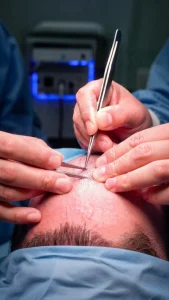
Gone are the days of unnatural, “doll-like” hairlines. Indian clinics now offer cutting-edge techniques including Robotic Transplants, Sapphire FUE, and Direct Hair Implantation (DHI) , ensuring minimal scarring and maximum natural density .
Section 2: Understanding Hair Transplant Techniques (FUE vs. DHI vs. FUT)
Before diving into costs, it is crucial to understand the procedures available. Your surgeon will recommend a technique based on your baldness grade and donor density.
FUE (Follicular Unit Extraction): This is the most common and affordable advanced technique. Individual hair follicles are extracted from the donor area (usually the back of the head) and implanted into the balding areas. It leaves tiny, dot-like scars that heal quickly and is ideal for most patients .
DHI (Direct Hair Implantation): An evolution of FUE, DHI uses a specialized “Choi Implanter” pen to simultaneously create the recipient site and implant the hair. This offers greater control over the depth, direction, and angle of the hair, resulting in a denser, more natural look .
FUT (Follicular Unit Transplant): An older method where a strip of skin is removed from the donor area and dissected into grafts. While it can yield many grafts in one session, it leaves a linear scar. It is less preferred in 2026 but may be recommended for specific cases requiring high graft numbers .
Quick Comparison: Healing Time
Technique Ideal Candidate Typical Healing Time
FUE Mild to moderate hair loss 7–10 days
FUT Severe baldness, high graft need 2–3 weeks
DHI Precision hairlines, minimal downtime 5–7 days
Source:
Section 3: Hair Transplant Cost in India 2026 (Detailed Breakdown)
Let’s talk numbers. The cost of a hair transplant in India is usually calculated on a “per graft” basis. This is the most transparent model, ensuring you pay only for the work done .
Cost Per Graft by Technique
In 2026, the cost per graft typically ranges from ₹40 to ₹120, depending on the technology and surgeon’s expertise .
Standard FUE: ₹40 – ₹70 per graft
Sapphire FUE: ₹55 – ₹90 per graft
DHI (Choi Implanter): ₹70 – ₹120 per graft
Estimated Total Cost by Grafts Needed
How many grafts do you need? A person with a receding hairline might need 1000-1500 grafts, while someone with a completely bald crown might need 3000-4000.
Number of Grafts Estimated Cost (at ₹50/graft) Estimated Cost (at ₹100/graft)
1000 Grafts ₹50,000 ₹1,00,000
2000 Grafts ₹1,00,000 ₹2,00,000
3000 Grafts ₹1,50,000 ₹3,00,000
4000 Grafts ₹2,00,000 ₹4,00,000
Source:
City-Wise Cost Variations
Where you get the procedure done also matters. Metro cities like Mumbai and Delhi have higher operational costs, which can reflect in the final price .
Mumbai: ₹60 – ₹110 per graft
Delhi NCR: ₹55 – ₹105 per graft
Bangalore: ₹50 – ₹100 per graft
Pune: ₹45 – ₹85 per graft
Chennai: ₹45 – ₹100 per graft
Important: Always ask for an all-inclusive quote. Additional costs like GST (18%), pre-op blood tests (₹2,000–₹5,000), and post-op kits are often extra .
Section 4: Top 5 Hair Transplant Hospitals in India (2026)
Choosing the right hospital is the most critical decision. Here are five of the top-tier facilities leading the way in 2026 .
1. Medanta – The Medicity (Gurugram, Delhi NCR)
Why Choose: One of India’s most prestigious multi-specialty hospitals, known for its robotic and NeoGraft technologies. They offer comprehensive post-op care with PRP sessions.
Approx. Cost: ₹60,000 – ₹1,50,000 per session.
Best For: International patients seeking high-end, hospital-based care.
2. Fortis Memorial Research Institute (Gurugram)
Why Choose: Globally recognized for cosmetic procedures. Their hair restoration unit specializes in DHI and robotic implantation with high graft survival rates.
Approx. Cost: ₹70,000 – ₹1,80,000 per session.
Best For: Patients looking for painless procedures with minimal downtime.
3. Apollo Hospitals (Chennai & Hyderabad)
Why Choose: India’s healthcare pioneer offers FDA-approved Sapphire FUE and trichoscopy-guided density mapping, ensuring natural results.
Approx. Cost: ₹75,000 – ₹2,00,000 per session.
Best For: Those wanting the security of a massive healthcare network.
4. DHI India (Delhi, Mumbai, Bangalore)
Why Choose: A global chain focusing exclusively on Direct Hair Implantation. Their patented tools ensure zero scarring and uniform density.
Approx. Cost: ₹1,00,000 – ₹2,50,000 per session.
Best For: Men and women with androgenetic alopecia seeking precision.
5. Dr. Batra’s® Hair Transplant Clinics (Pan-India)
Why Choose: With 90+ clinics, they offer accessibility and consistency. They use Bio-PRP enhanced FUE and AI-based graft calculation.
Approx. Cost: ₹60,000 – ₹1,20,000 per session.
Best For: Pan-India accessibility and EMI options.
Section 5: Post-Transplant Care: Protecting Your Investment
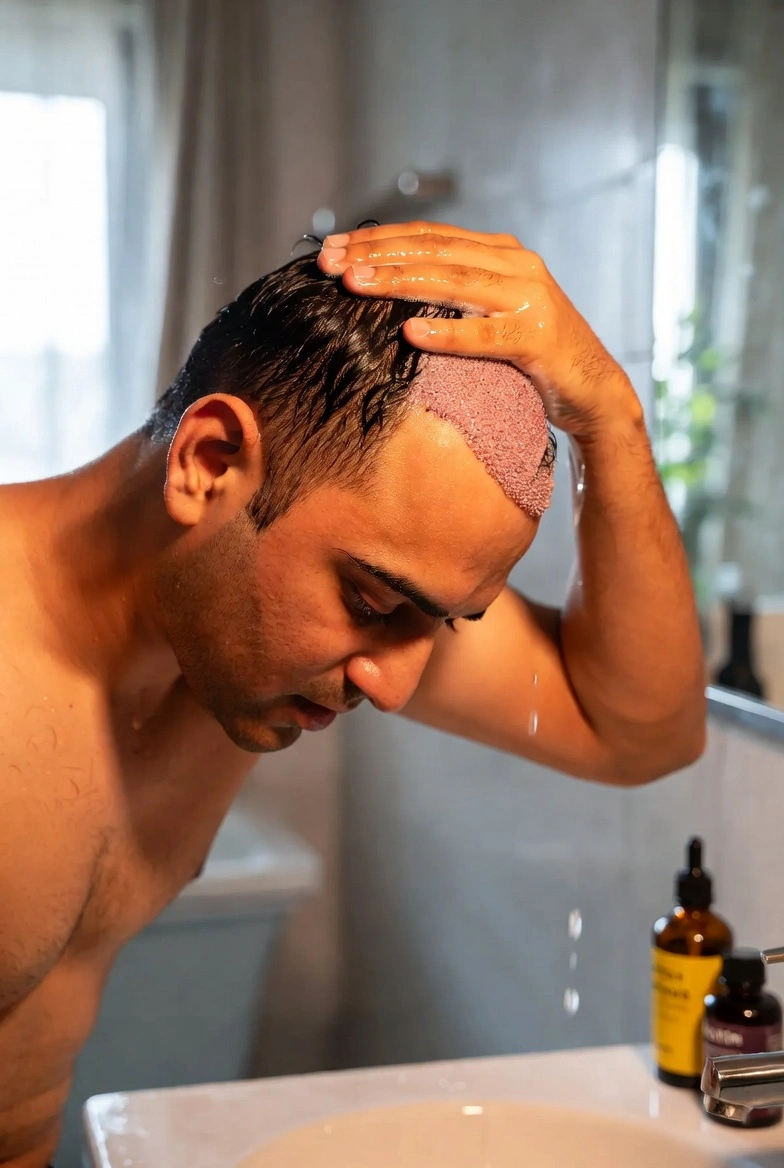
A hair transplant is an investment. To ensure the best results, post-operative care is just as important as the surgery itself. Your scalp is sensitive, and the newly implanted grafts (and your existing native hair) need the right environment to thrive .
The First Few Weeks
Day 1-3: Scabs will form. You will be given specific instructions on how to gently wash your hair. Do not scratch or pick at the scabs.
Day 7-10: Scabs usually fall off. You can generally return to work.
Month 1: The transplanted hair will shed. This is called “shock loss” and is completely normal. The root is still there, preparing to grow new hair.
The Right Products to Use (And Avoid)
Using harsh chemicals post-transplant can damage follicles and ruin results. Here is what the experts recommend:
Shampoo: Switch to a Sulfate-free and Paraben-free shampoo. These cleanse gently without stripping the scalp of its natural moisture, preventing irritation .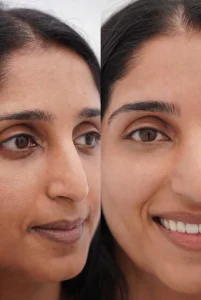
Look for ingredients: Aloe Vera, Tea Tree Oil, Biotin.
Product Pick on Amazon India: [Search for “Sulfate Free Shampoo for Hair Transplant”]
Hair Oils: Certain oils aid healing, while others are too heavy.
Safe Oils: Almond Oil (light, nutrient-rich), Bhringraj Oil (Ayurvedic rejuvenator), and Olive Oil (moisturizing) are excellent choices .
Oils to AVOID: Coconut Oil (can be too heavy and clog pores) and Mustard Oil (can cause inflammation) are generally not recommended immediately after surgery .
Product Pick on Amazon India: [Search for “Bhringraj Oil”] or [Search for “Organic Almond Oil for Hair”]
The Role of Supplements
To support regrowth from within, doctors often recommend supplements that combat oxidative stress and nourish follicles .
Minoxidil 5%: Often prescribed to maintain native hair and support the transplanted area. Note: Must be used consistently as prescribed.
Biotin and Vitamin Complexes: These help strengthen hair from the root.
Product Pick on Amazon India: [Search for “Biotin Hair Growth Supplements”] or [Search for “Minoxidil 5%”]
Section 6: Hair Loss Treatments vs. Transplants
A transplant is not always the first step. For those in the early stages of hair loss, non-surgical treatments can be highly effective. In India, the average success rate for hair loss treatments is an impressive 98% .
PRP (Platelet-Rich Plasma) Therapy: Your blood is processed to concentrate the platelets, which are then injected into the scalp to stimulate dormant follicles. It costs between ₹5,000 to ₹15,000 per session, with 3-4 sessions usually recommended .
Medications: Topical solutions like Minoxidil and oral medications like Finasteride are common first-line defenses against genetic balding .
If you are under 25, doctors often advise waiting until your hair loss pattern stabilizes before opting for surgery. A combination of medication and PRP might be a better starting point .
Section 7: Frequently Asked Questions (FAQ)
Q: Is a hair transplant permanent?
A: Yes. The hair follicles taken from the back and sides of the head (the “permanent zone”) are genetically resistant to balding. Once transplanted, they continue to grow for life .
Q: What is the success rate?
A: In expert hands, the success rate is excellent, ranging from 95% to 98% . This depends on the surgeon’s skill and your adherence to post-op care .
Q: Will it look natural?
A: When done by an experienced surgeon, yes. Modern techniques like DHI and Sapphire FUE allow for the implantation of grafts at the correct angle (40-45 degrees) and direction, mimicking natural hair growth patterns .
Q: When will I see the final results?
A: Patience is key. The new hair usually starts to grow visibly around the 3-4 month mark. You will see significant results by 8-12 months post-surgery .
Q: Can I use hair oil after a transplant?
A: Yes, but only specific oils like Almond or Bhringraj, and only after your surgeon gives the go-ahead (usually after the first scab wash). Avoid heavy oils like coconut oil initially .
Conclusion
The decision to undergo a hair transplant is a life-changing step toward restoring your confidence. In 2026, India offers an unparalleled combination of world-class technology, highly skilled surgeons, and affordable pricing. Whether you are a young professional just starting to notice thinning, or someone who has lived with hair loss for a decade, there is a solution for you.
The key takeaway? Don’t chase the cheapest price. Focus on the surgeon’s experience, the technology used, and the transparency of the clinic .
Ready to Start Your Journey?
If you are considering a hair transplant, the next step is a consultation. Share your concerns, get a proper graft assessment, and build a personalized plan.
Disclaimer: This article is for informational purposes only and does not constitute medical advice. Always consult with a qualified and certified surgeon for a proper diagnosis and treatment plan.
About the Author