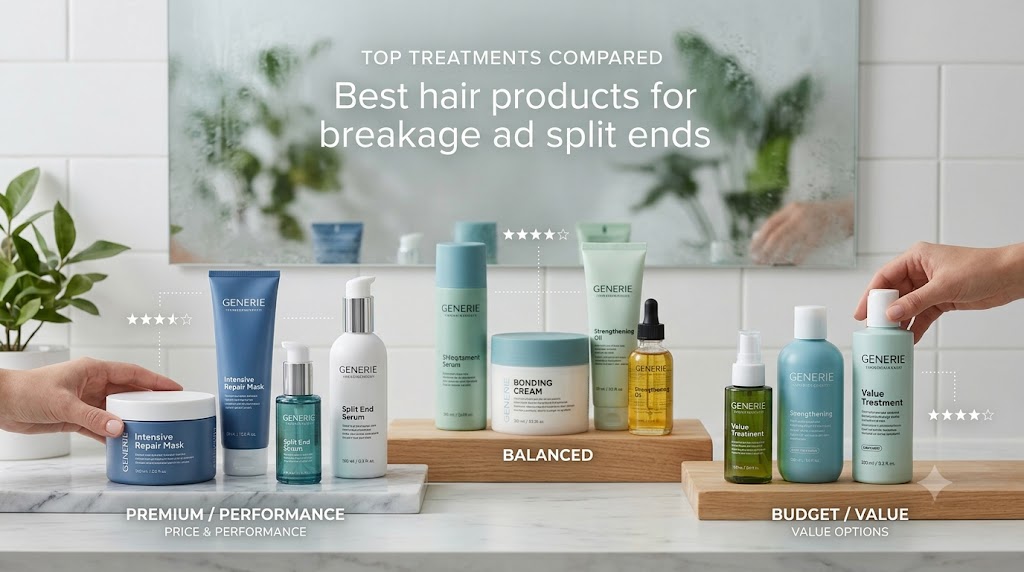
Best hair products for breakage and split ends are not miracle cures — and that is exactly why this comparison matters. If you have already tried a product that promised repair and delivered only temporary softness, you are not alone. This guide compares three treatment options by price, performance, and real-world value, then adds a color-coded DIY care plan and FAQs.
Table of Contents
Quick Verdict
Best hair products for breakage and split ends can improve surface texture, reduce friction-driven snapping, and temporarily smooth frayed ends — but no over-the-counter product permanently fuses a split end back together. Dermatology guidance is clear: once the hair shaft splits, the only permanent removal is a trim.
The strongest value comes from bond-building or protein-based treatments used sparingly, paired with silicone or oil-based finishing products that cut mechanical damage during styling. Budget picks can beat premium ones when the ingredient list matches your actual damage type.
Affiliate Disclosure
This article contains affiliate links. If you purchase through a qualifying link, we may earn a commission at no additional cost to you. This does not determine which products are included or how they are evaluated. Product availability and pricing can change — always verify current details on the retailer’s page.
Introduction: Why Breakage and Split Ends Need a Strategy
Hair is not living tissue in the way skin is. The shaft is made of keratin that cannot regenerate once structurally damaged. That is why the best hair products for breakage and split ends focus on protection and appearance — not permanent repair.
The practical question is not “which product reverses damage?” It is “which product gives the best mix of surface smoothing, breakage reduction, and cost-per-use for my hair?” This comparison focuses on that question. It separates temporary cosmetic improvement from meaningful mechanical protection, and flags where a trim matters more than another bottle.
Comparison Table: Price, Performance, and Value
| Product | Best for | Format | Price | Performance reality | Value |
|---|---|---|---|---|---|
| Product A View on Amazon |
Frayed ends needing surface smoothing | Leave-in / treatment (verify on listing) | Check Amazon (not verified here) | Cosmetic smoothing and slip are realistic; permanent split-end repair is not | Moderate |
| Product B View on Amazon |
Breakage-prone hair during brushing | Treatment (verify ingredients) | Check Amazon (not verified here) | Friction reduction is the most defensible benefit | Potentially high |
| Product C View on Amazon |
Damaged cuticle needing conditioning | Mask / conditioner (verify) | Check Amazon (not verified here) | Conditioners and oils temporarily smooth the cuticle | Good for maintenance |
Prices and exact ingredient lists were not verifiable from the supplied links at the time of writing. Confirm current formulations, sizes, and cost per ounce on Amazon before purchase.
Product Breakdowns & Affiliate Options
Product A: Surface Smoothing for Frayed Ends
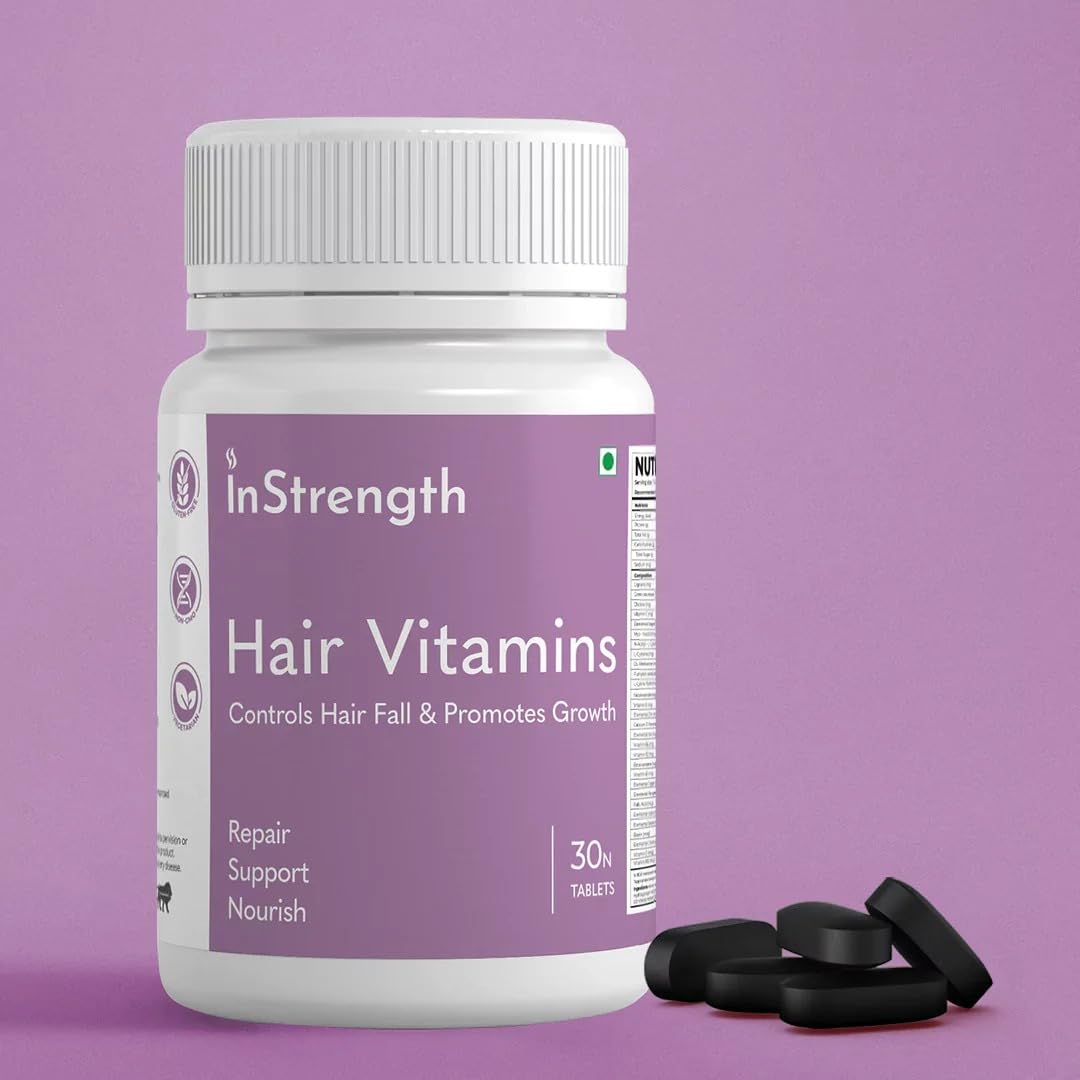
This option is best framed around cosmetic improvement of frayed ends. Dermatology guidance is clear that products in this category can temporarily bind or coat frayed fibers so they look less obvious until the next wash — but they do not restore internal structure.
Product A — check current price and details
Best for readers who want smoother-looking ends for a work week or event.
What to verify on the listing: whether the formula relies on silicones (dimethicone, amodimethicone) for slip, whether it contains hydrolyzed proteins for temporary surface filling, and whether the size justifies the price. Silicones are not inherently harmful; they improve manageability and cut friction, which is directly relevant to breakage prevention. For more on matching conditioner type to damage, see our guide on how to choose a conditioner for damaged hair.
Who may prefer something else: If hair feels stiff or straw-like after protein-heavy products, a protein-dominant formula may not suit you. If ends are split several centimeters up the shaft, no leave-in will fix that — a trim is the only structural solution.
Product B: Breakage Reduction During Styling
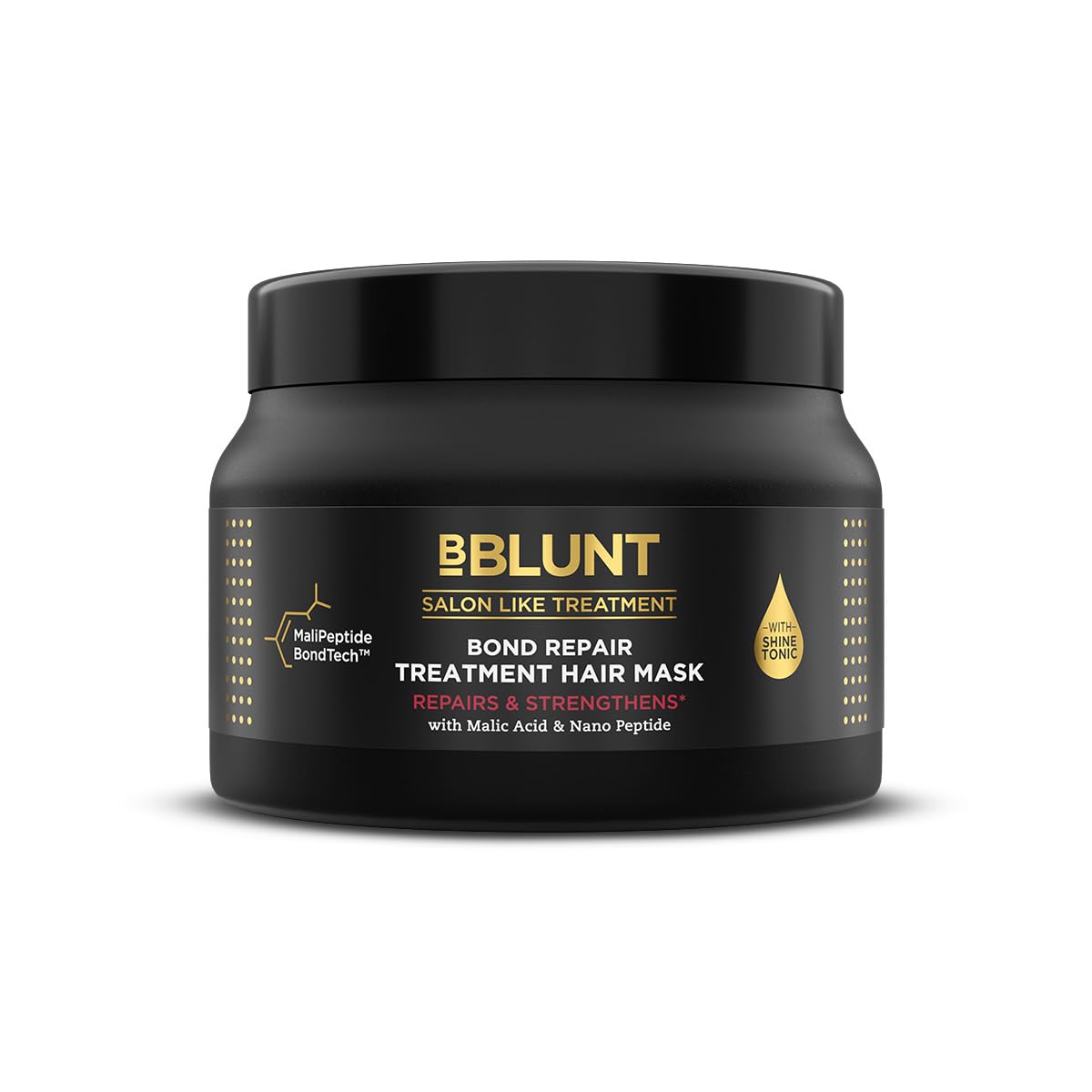
The most defensible benefit for many “breakage” products is friction reduction, not permanent repair. Wet hair stretches and snaps more easily; dry hair with a rough cuticle catches on combs. A treatment that improves slip reduces the mechanical forces behind mid-shaft breaks.
Product B — compare options and pricing
Practical buying consideration: Look for whether the product is a pre-styling treatment, a rinse-out conditioner, or a leave-in. A rinse-out used as directed conditions without buildup; a leave-in used too heavily weighs fine hair down.
Realistic expectation: Improved combing and fewer broken hairs on the bathroom floor are meaningful outcomes. A dramatic “repair” of already-split ends is not a realistic claim for any topical product. For the difference between surface damage and root-level shedding, read signs your hair breakage needs a dermatologist.
📌 Progress, not perfection: fewer snaps on the comb today is a real win for your hair tomorrow.
Product C: Conditioning Support for Damaged Cuticles
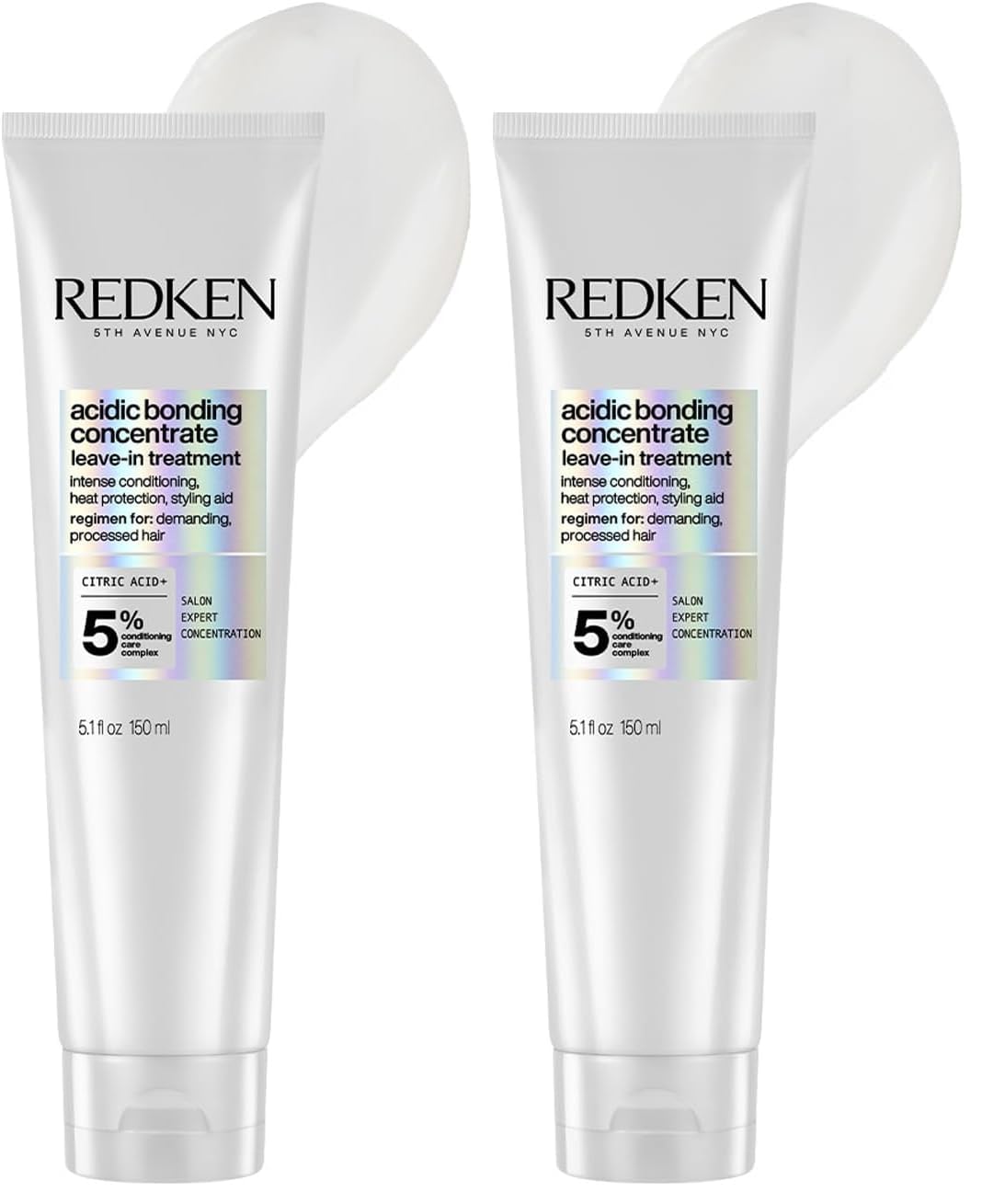
Damaged cuticles — the outer layer of the hair — benefit most from conditioning agents and occlusive ingredients that smooth the surface and reduce moisture loss. Cationic conditioners and oils improve softness and shine, but the effect is temporary and washes out.
Product C — review eligibility and pricing
Ingredients that matter: Coconut oil has the most consistent evidence for reducing protein loss from hair when used as a pre-wash treatment — though it is not a cure for split ends. Hydrolyzed proteins can temporarily fill rough spots, but overuse can make hair stiff. Glycerin and panthenol attract moisture; silicones provide slip and shine.
📌 Consistency beats intensity. A simple weekly conditioning habit will do more for your ends than a cabinet full of half-used miracle promises.
Color-Coded DIY Care Box for Ladies Losing Hair, Split Ends & Damaged Cuticles
Use this low-cost routine while you decide on products. These points are drawn from dermatologist-informed guidance and are not a substitute for medical advice.
| 🟢 Do This | 🟡 Use With Care | 🔴 Avoid / Reconsider |
|---|---|---|
| Trim split ends every 8–12 weeks — splits travel upward | Protein treatments: useful for some, but too much makes hair stiff | Brushing wet hair aggressively — it is more fragile |
| Use a wide-tooth comb on conditioned, damp hair | Coconut oil pre-wash: helpful, but patch-test for scalp sensitivity | Tight ponytails, braids, or extensions that pull the hairline |
| Apply conditioner to mid-lengths and ends, not the scalp | Silicones: not “evil,” but clarify periodically if hair feels coated | DIY raw-egg masks — bacterial risk, inconsistent protein size |
| Lower heat-tool temperatures and use a heat protectant | Bond builders: promising but not a guarantee — follow directions | Assuming “more ingredients” means better repair |
| Sleep on a smooth-fabric pillowcase to reduce friction | Essential oils: dilute properly; some can irritate | Ignoring sudden shedding, scalp pain, or patchy loss — see a dermatologist |
For ladies noticing both breakage and shedding: Breakage is shaft damage; shedding is root-level hair loss. They are managed differently. If you see white bulbs at the end of fallen hairs, that is shedding, not breakage. Persistent shedding, scalp redness, or patchy loss warrants a medical review.
📌 Your hair does not need a 12-step routine. It needs fewer insults and more consistency. Start with one change from the green column this week.
FAQs
Do hair products actually repair split ends?
No. Dermatologists agree that once a hair fiber splits, it cannot be permanently fused by a topical product. Products can temporarily smooth, coat, or bind frayed ends so they look better — but the only permanent removal is trimming.
What is the difference between breakage and split ends?
Split ends are fraying at the hair tip. Breakage can occur anywhere along the shaft where the cuticle has been weakened by heat, chemicals, or friction. Both involve structural damage, but breakage often signals more widespread fragility.
Can bond-building treatments fix damaged hair?
Bond builders are among the more promising recent developments, and some evidence supports their use for certain damage types. However, severe damage to the cortex cannot be fully reversed, and they are not a substitute for trimming split ends. Follow the manufacturer’s frequency instructions — overuse is not better.
Are expensive hair products worth it for breakage?
Not automatically. Ask: Does the formula contain ingredients that address your issue (slip, conditioning, temporary protein filling)? Is the cost per use reasonable? Does the format match your routine? A mid-priced conditioner used consistently can outperform a premium product used sporadically.
What ingredients should I look for in a product for damaged cuticles?
Conditioning agents (behentrimonium chloride, cetrimonium chloride), silicones for slip (dimethicone, amodimethicone), hydrolyzed proteins in moderation, and humectants like glycerin or panthenol are reasonable starting points. Coconut oil has specific evidence for reducing protein loss as a pre-wash treatment.
When should I see a dermatologist instead of buying another product?
Seek professional assessment for patchy hair loss, scalp pain, redness, scaling, sudden severe shedding, or breakage that continues despite gentler styling. These patterns may indicate a scalp or systemic issue that products cannot address.
📌 Buying smarter is not about spending more — it is about matching the product to the actual problem. A trim and a simpler routine are sometimes the highest-value “treatment” available.
Final Verdict: Which Option Deserves Your Money?
There is no single winner without knowing your hair’s damage pattern, porosity, and routine. What the evidence supports is a layered approach:
- Temporary smoothing of visible frayed ends: Product A may fit, provided you understand the benefit is temporary and washes out.
- Reducing breakage during combing and styling: Product B’s friction-reduction angle is the most mechanically meaningful goal for a topical product.
- Ongoing conditioning support for a rough cuticle: Product C is a reasonable maintenance tool — especially used weekly, not as a “cure.”
The strongest value decision is not the product alone. It is the combination of a trim to remove existing splits, a gentle routine that reduces new damage, and one or two products that match your actual hair behavior. If you have been cycling through products without addressing heat, brushing, or tight hairstyles, your product budget is being spent in the wrong place.
Before buying, verify on the Amazon listing: current price, size, ingredient list, whether the format is rinse-out or leave-in, and whether the product fits your hair’s protein tolerance. None of the three links above were independently tested for this article, and prices were not verified at publication.
Ready to compare the three options side by side?
Disclosure, Disclaimer, and PS
Affiliate disclosure: This article contains Amazon affiliate links. As an Amazon Associate, qualifying purchases may generate a commission. This does not affect the price you pay or the editorial assessment of product categories. Product availability and formulations can change — always confirm details on the retailer’s page.
Medical disclaimer: This content is for educational purposes and does not constitute medical advice. Hair loss, scalp symptoms, and sudden changes in hair quality should be evaluated by a qualified dermatologist or healthcare professional. Do not stop or change prescribed treatments without professional guidance.
PS: If you take one thing from this comparison, make it this: split ends are removed, not repaired. The best product for your money is the one that supports the healthy hair you still have while you schedule the trim that removes what cannot be fixed. Start there, and the product decisions become much simpler.
Author and Reviewer Recommendation
This article should be reviewed by a board-certified dermatologist with clinical experience in hair and scalp disorders before publication. Author credentials should reflect genuine content-writing or editorial experience in health and beauty; no fabricated testing or firsthand claims should be added.
- how to choose a conditioner for damaged hair
- signs your hair breakage needs a dermatologist
- bond builders vs. protein treatments: what’s the difference
- American Academy of Dermatology — Hair Care Tips
- NIH/PMC — Effect of mineral oil, sunflower oil, and coconut oil on prevention of hair damage
- FDA — Cosmetics Labeling Claims
Best hair products for breakage and split ends comparison guide
About the Author