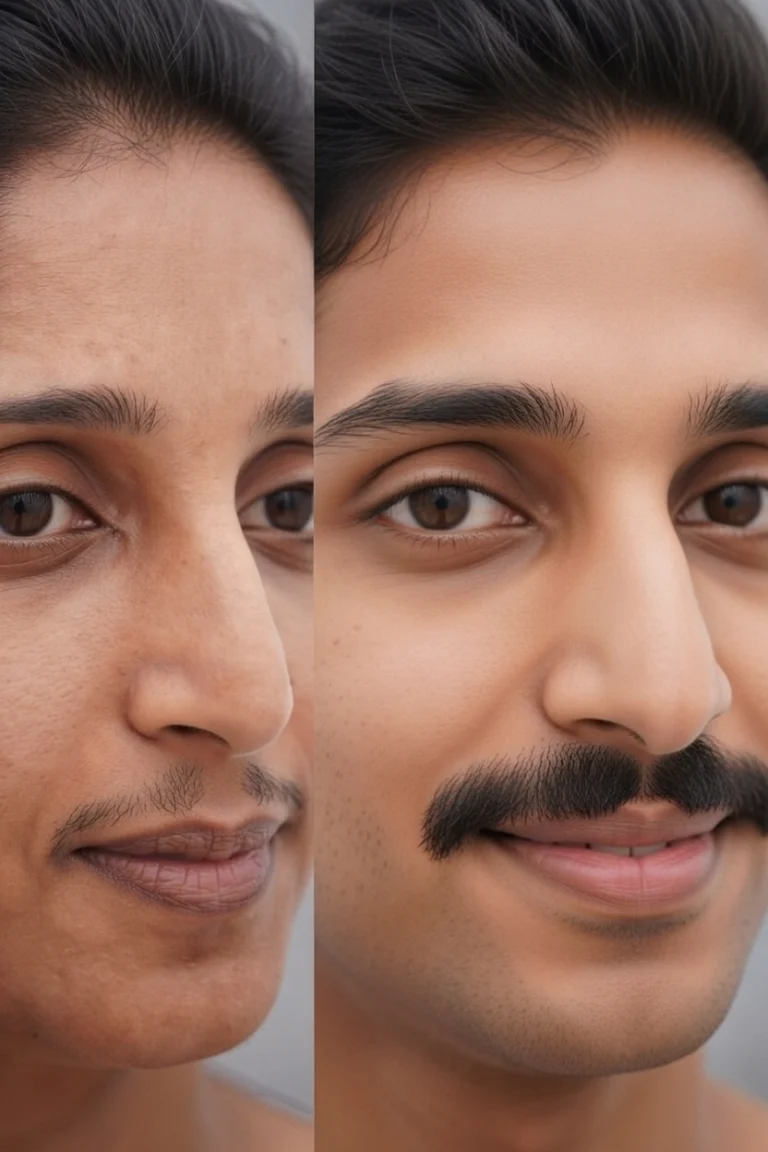
Fixing Uneven Mustache Growth: The Complete Guide to Achieving Symmetry and Fullness
There’s nothing more frustrating than looking in the mirror and seeing a mustache that grows thicker on one side than the other. You’ve been patient. You’ve let it grow. But instead of the distinguished, symmetrical mustache you envisioned, you’re left with patches, sparse areas, and a lopsided appearance that seems to mock your efforts.
Here’s the truth that most grooming articles won’t tell you: perfectly even mustache growth is rare. In fact, asymmetrical facial hair is the norm, not the exception. The good news? You don’t need perfect genetics to have a great-looking mustache. With the right strategies, grooming techniques, and a little patience, you can transform uneven growth into a stylish feature rather than a frustrating flaw.
This comprehensive guide covers everything you need to know about fixing uneven mustache growth—from understanding why it happens to practical styling solutions, grooming techniques, products that help, and long-term strategies for encouraging better growth.
Part 1: Understanding Why Your Mustache Grows Unevenly
Before you can fix uneven mustache growth, you need to understand what’s causing it. The reasons are largely out of your control—but knowing them helps set realistic expectations and choose the right approach.
The Genetics Factor: It’s in Your DNA
The primary reason for uneven mustache growth is simply genetics. Your hair follicles have predetermined sensitivity to dihydrotestosterone (DHT), the hormone responsible for facial hair development. Some follicles respond strongly to DHT, producing thick terminal hair, while others remain less active, producing only soft vellus hair (peach fuzz).
This genetic blueprint explains several common patterns:
-
One-sided dominance: Many men have a “strong side” where hair grows thicker and faster
-
Center gaps: The area directly under the nose is notoriously sparse for some men
-
Weak corners: The ends of the mustache near the mouth may be thin or nonexistent
-
Patchy density: Some areas produce terminal hair while others produce only vellus hair
These patterns are determined before you’re born. You didn’t cause them, and you can’t completely eliminate them through effort alone.
Hormones and Development
Your hormone levels play a crucial role in mustache development. Testosterone and its more potent derivative, DHT, signal facial hair follicles to produce terminal hair. However, it’s not just about how much testosterone you have—it’s about how sensitive your follicles are to it.
Age matters significantly. If you’re under 25, your mustache may not have reached its full potential. Many men don’t develop complete facial hair density until their mid-20s or even early 30s. The second half of your twenties often brings increased facial hair maturity as hormone levels stabilize and follicles continue to respond.
Testosterone fluctuations can also affect growth. While natural variations are normal, significant hormonal shifts—whether from age, stress, or medical conditions—can impact facial hair development.
The Asymmetry Truth: Everyone Is Uneven
Here’s something barbers know that most men don’t: facial hair is naturally asymmetrical. Just as your face isn’t perfectly symmetrical, neither is your hair growth. The left and right sides of your body respond slightly differently to hormones, have slightly different blood flow patterns, and develop at slightly different rates.
This means that even men with seemingly full, even mustaches have some degree of asymmetry. They’ve simply learned to work with it.
Secondary Factors That Can Affect Growth
While genetics dominate, other elements can play supporting roles:
-
Nutritional status: Deficiencies in biotin, vitamin D, iron, or zinc may impact hair quality and growth rate
-
Skin health: Conditions like seborrheic dermatitis, eczema, or Folliculitis barbae can affect follicle performance
-
Stress and sleep: Chronic stress elevates cortisol, which can disrupt hormone balance and hair growth cycles
-
Blood circulation: Areas with better blood flow may support more robust hair growth
-
Previous damage: Scarring from cuts, burns, or severe skin conditions can permanently affect follicles
Part 2: Assessment—What Kind of Unevenness Do You Have?
Not all uneven mustache growth is the same. Identifying your specific pattern is the first step toward fixing it.
Pattern 1: Density Differences
One side of your mustache is noticeably thicker or darker than the other. This is the most common form of unevenness and often the easiest to manage with styling techniques.
Pattern 2: Patchy Areas
You have isolated spots where hair is sparse or missing entirely—often under the nose, at the corners of the mouth, or in small patches along the mustache line.
Pattern 3: Directional Issues
Your hair grows in multiple directions, creating a disorganized appearance that makes the mustache look thinner and more uneven than it actually is.
Pattern 4: Growth Rate Differences
One side grows faster than the other, making your mustache look unbalanced between trims. This requires different maintenance strategies.
Pattern 5: Color Variation
Some hairs are darker, some lighter, creating a patchy appearance even when density is adequate.
Pattern 6: Texture Differences
Some areas produce coarse, thick hair while others produce fine, soft hair—creating visual inconsistency.
Take a moment to honestly assess which patterns apply to you. Most men have a combination of several. This assessment will guide your approach.
Part 3: Smart Styling Solutions—Work With What You Have
The fastest way to “fix” an uneven mustache isn’t to force growth—it’s to choose a style that works with your natural pattern. This section covers mustache styles that minimize unevenness and those you should avoid.
Styles That Minimize Unevenness
The Classic Chevron
Best for: Men with decent overall density but minor patchiness or asymmetry
The chevron is full, natural, and covers the top lip completely. It draws attention to the overall shape rather than isolated thin spots. Think Henry Cavill or Tom Selleck—it’s confident and timeless.
Why it works for uneven growth: The fullness of the style creates visual bulk that masks minor density differences. By keeping the mustache relatively short (just above the lip line) but full, you minimize the appearance of patches while maintaining a classic look.
How to style it: Let the mustache grow to cover the upper lip completely. Trim just along the lip line to keep it neat, but maintain fullness throughout. Comb straight down for a traditional look.
The Pencil Mustache
Best for: Men with lighter growth or patchy areas who want a refined, intentional look
If your growth is naturally lighter or patchy in certain areas, a thin, neat line just above the lip can actually work in your favor. This style requires less density and can make sparse growth look intentional and refined. Actors like Paul Mescal and John Waters have demonstrated how elegant this look can be.
Why it works for uneven growth: By trimming the mustache to a very thin line, you eliminate the visual contrast between thick and thin areas. What remains is a clean, deliberate line that doesn’t require full density.
How to style it: Allow the mustache to grow for about a week, then carefully trim everything except a thin line just above the lip. Use precision scissors or a trimmer with a very narrow guard. Keep the edges clean and defined.
The Natural/Original Stache
Best for: Men with mild unevenness who want a low-maintenance look
This is simply a well-groomed mustache without heavy styling—neat, trimmed, and natural. It’s versatile and suits most face shapes.
Why it works for uneven growth: By avoiding extreme styles, you minimize attention on any specific area. The focus remains on overall grooming rather than perfect symmetry.
How to style it: Trim regularly to maintain a neat appearance, but don’t over-style. Keep the mustache at a length that looks full without being unruly. Comb daily to train hair direction.
The Beardstache
Best for: Men whose mustache is their strongest facial hair asset
This combines a full mustache with short stubble or a short beard elsewhere, drawing attention upward. If your mustache—even with minor unevenness—is your best feature, this style puts it front and center.
Why it works for uneven growth: The contrast between the mustache and the stubble creates visual interest that distracts from minor asymmetry. The stubble also provides context that makes the mustache look intentional rather than problematic.
How to style it: Grow your mustache to desired length while keeping beard or stubble at a consistent short length (3-5mm). Ensure clean lines where the mustache meets the cheeks.
The Detached Mustache
Best for: Men with uneven growth at the corners or cheeks
Pair your mustache with a goatee or circle beard that doesn’t connect at the corners. This works well when the mustache stands on its own and you want to avoid emphasizing the transition from mustache to patchy cheek areas.
Why it works for uneven growth: By creating a deliberate separation, you eliminate the need for the mustache corners to be perfect. The style works whether the corners are full or sparse.
How to style it: Grow your mustache and goatee while keeping the cheeks clean-shaven or very short. Define the edges carefully where the mustache ends and the bare skin begins.
Styles to Avoid
When dealing with significant unevenness, certain styles can highlight rather than hide asymmetry:
-
Extremely long handlebars: Long, drooping styles can make patchiness more noticeable as the hair spreads out and gaps become visible
-
Walrus mustaches: The fullness required for this style can emphasize thin areas if your density isn’t uniform
-
Super precise geometric shapes: Sharp angles and perfect lines draw attention to any asymmetry
-
Ultra-thin styles with gaps: If you have significant patches, very thin styles can look broken rather than intentional
The Power of Strategic Compromise
Sometimes the most effective approach is to embrace your natural pattern rather than fighting it. If your mustache naturally grows stronger on one side, consider:
-
Off-center styling: Style the mustache to complement your natural asymmetry rather than fighting it
-
Emphasizing your strong side: Let the fuller side guide your overall shape
-
Accepting character: Remember that slight asymmetry adds character and uniqueness to your look
Part 4: Grooming Techniques That Create the Illusion of Fullness
Strategic grooming can make a significant difference in how even your mustache appears. These techniques require practice but deliver visible results.
Precision Trimming Creates Symmetry
The biggest mistake men make is trimming too early or too aggressively. This section covers proper trimming technique for uneven growth.
The Patience Principle
Let it grow first: Allow your mustache to grow for at least two to four weeks before any major trimming. This reveals your true growth pattern and gives you more material to work with. Trimming too early removes options.
The Gradual Approach
Trim incrementally: Always err on the side of caution. Trim a little, check the result, then trim more if needed. You can always take more off, but you can’t put it back. This is especially important when dealing with uneven growth.
The Comb-Down Method
Comb downward before trimming: Before you make any cuts, comb the hair downward over your lip. This helps you see the actual length and identify uneven spots. Hair that’s sticking up or out will look longer than it actually is.
The Scissors Advantage
Use precision scissors for detail work: While electric trimmers are great for bulk removal, small, sharp barber scissors give you control that trimmers can’t match for detail work. They allow you to snip individual stray hairs without affecting overall length.
Search for professional mustache scissors on Amazon:
Find Mustache Scissors
The Strong Side Strategy
Trim to your weaker side: When shaping, use your weaker-growing side as the template. Trim the stronger side to match, rather than trying to force the weak side to catch up. This creates intentional symmetry rather than fighting your natural pattern.
The Corner Management Technique
Define corners carefully: The corners of your mouth are where unevenness often shows most. Use these steps for better corner management:
-
Let the corners grow fully during your initial growth period
-
Use the corner of your mouth as a guide point
-
Trim in a subtle diagonal line from nose to mouth corner
-
Check both sides constantly for symmetry
Training Hair Direction
Daily brushing trains your mustache hair to grow in a unified direction, which visually fills in sparse areas. Hair growing in multiple directions creates shadows and gaps that make density appear lower.
The Brushing Routine
Morning and evening: Spend one to two minutes brushing your mustache in the desired direction. For most men, this means downward or slightly outward from the center.
Use the right tool: A fine-toothed mustache comb or boar bristle brush works best. Boar bristle brushes are particularly effective because they distribute natural oils while training hair.
Find mustache combs on Amazon:
Shop Mustache Combs
The Heat Technique
Warm brushing: After a warm shower, hair is more pliable. Brush immediately while hair is still warm to encourage it to conform to your desired direction.
Persistent Training
Consistency matters: Hair takes time to “learn” a new direction. Be consistent with your brushing for several weeks before expecting permanent changes.
The Power of Tinting
If your unevenness includes lighter-colored hairs that don’t match darker ones, tinting can create a fuller, more uniform appearance without adding bulk.
Professional vs. At-Home
Professional tinting: A barber or esthetician can match your natural color precisely and apply the tint evenly. This is the safest option for first-timers.
At-home options: Products designed specifically for facial hair (not head hair) can be used carefully at home. Look for semi-permanent formulations that wash out gradually.
Important precautions: Always patch test first. Never use head hair dye on facial hair—the formulations are different and can cause skin reactions.
Strategic Product Use
The right products can make uneven growth less noticeable.
Mustache Wax for Coverage
Wax provides hold and can help manipulate hair to cover sparse spots. Warm a small amount between your fingers and work it through, then use a comb to direct hair where you want it. For patchy areas, you can gently pull adjacent hair to create coverage.
Search for mustache wax on Amazon:
Find Mustache Wax
Beard Balm for Texture
Balm adds light hold and texture while conditioning. The added body can make hair appear thicker and more substantial, minimizing the appearance of thin spots.
Beard Oil for Skin Health
Oil keeps the skin beneath your mustache healthy and hydrated. Healthy skin supports better hair appearance and may encourage optimal growth conditions.
Explore beard oils on Amazon:
Shop Beard Oil
Fiber Products
Some grooming products contain tiny fibers that adhere to existing hair, creating instant visual thickness. These work similarly to hair thickening products for scalps and can be effective for special occasions.
Part 5: Long-Term Strategies for Encouraging Better Growth
While you can’t change your genetics, certain practices may support optimal mustache development over time. These strategies require patience and consistency.
Nutrition: Fuel for Follicles
Hair is made of protein, and healthy growth requires adequate nutrition. Focus on:
Protein: Hair is primarily keratin, a protein. Ensure adequate protein intake from sources like eggs, lean meats, fish, beans, and legumes.
Biotin: This B-vitamin is associated with hair health. Found in eggs, nuts, sweet potatoes, and seeds.
Vitamin D: Low vitamin D has been linked to hair thinning. Sun exposure and foods like fatty fish, egg yolks, and fortified products provide vitamin D.
Zinc: Supports hair tissue growth and repair. Found in oysters, beef, pumpkin seeds, and lentils.
Iron: Essential for hair health. Found in red meat, spinach, lentils, and fortified cereals.
Omega-3 fatty acids: Support scalp health. Found in fish, flaxseeds, and walnuts.
While supplements can help address deficiencies, whole foods are generally the best source of these nutrients.
Sleep: The Recovery Period
Hair growth occurs during rest phases of your body’s cycles. Chronic sleep deprivation can disrupt hormone balance and reduce growth efficiency.
Aim for 7-8 hours of quality sleep nightly. Consistent sleep schedules support overall hormone health.
Stress Management
Chronic stress elevates cortisol, which can disrupt hormone balance and potentially affect hair growth cycles. While occasional stress is normal, chronic high stress may impact facial hair development.
Effective stress management approaches include:
-
Regular exercise
-
Adequate sleep
-
Meditation or mindfulness practices
-
Time in nature
-
Hobbies and social connection
Stimulation Techniques
Daily Massage
Gentle massage when applying beard oil increases circulation to follicles. Use fingertips in circular motions for 1-2 minutes daily. This won’t create new follicles but may support the health of existing ones.
Microneedling (Derma Rolling)
This technique involves using a roller with tiny needles to create micro-injuries in the skin, stimulating blood flow and collagen production. Some evidence suggests it may support hair growth.
For mustache use:
-
Use a 0.5mm roller (appropriate for facial use)
-
Sanitize thoroughly before and after each use
-
Roll gently in multiple directions once or twice weekly
-
Apply nourishing oils afterward
-
Be consistent for several months to see potential results
Important: Research proper technique thoroughly before attempting. Poor technique can cause irritation or damage.
Medical Options
For significant concerns, consult a dermatologist. They can provide personalized assessment and options.
What a Dermatologist Can Do
-
Evaluate hormone levels through blood work
-
Assess for underlying skin conditions affecting follicles
-
Rule out medical causes of hair loss
-
Discuss prescription options
Minoxidil for Facial Hair
Topical minoxidil (commonly known as Rogaine) has shown effectiveness for stimulating facial hair in some men. Originally developed for scalp hair loss, many men have used it “off-label” for beard and mustache growth.
What the evidence suggests:
-
Some men experience significant new growth
-
Results typically take 3-6 months of consistent use
-
Effects may be permanent for hairs that become terminal
-
Not everyone responds
-
Side effects can include skin irritation and, rarely, cardiovascular effects
Important: This is a medication. Consult a healthcare provider before starting. Never use more than directed, and be aware that minoxidil is toxic to cats—even small amounts can be fatal.
Prescription Options
In some cases, doctors may prescribe other treatments based on individual assessment. These might include topical retinoids or hormone evaluation and management.
Part 6: The Daily Maintenance Routine
Consistency is key to managing uneven mustache growth. This daily routine takes about 5-10 minutes and makes a visible difference.
Morning Routine (5 minutes)
-
Wash or rinse (1 minute): In the shower or at the sink, gently cleanse your mustache. This removes overnight product and prepares hair for styling.
-
Towel dry gently (30 seconds): Pat dry rather than rubbing. Hair is fragile when wet.
-
Comb through (1 minute): Use a fine-toothed comb to detangle and begin training hair direction.
-
Apply product (1 minute): Work a small amount of beard oil into the skin beneath. If using balm or wax, warm between fingers and apply.
-
Final styling (1-2 minutes): Comb or brush into place, paying attention to covering any sparse areas by directing adjacent hair.
Evening Routine (3 minutes)
-
Rinse if needed (30 seconds): Remove environmental debris if you’ve been active.
-
Brush or comb (1-2 minutes): Train hair in your desired direction. This is when hair is most pliable for training.
-
Optional overnight treatment (30 seconds): Some men apply a small amount of beard oil or balm before bed for extra conditioning.
Weekly Maintenance (15-20 minutes)
-
Deep clean (5 minutes): Use a clarifying beard wash to remove product buildup.
-
Trim check (10 minutes): Assess for stray hairs and trim carefully if needed. Remember to trim less than you think you need.
-
Exfoliate (3 minutes): Gently exfoliate the skin beneath to prevent ingrown hairs and support healthy follicles.
-
Deep condition (5+ minutes): Apply a beard conditioner or mask and leave for recommended time.
Monthly Assessment
Take time once a month to honestly assess your progress:
-
Take photos from multiple angles
-
Compare to previous months
-
Note what’s working and what isn’t
-
Adjust your approach as needed
Part 7: What to Avoid—Common Mistakes That Worsen Unevenness
Mistake 1: Trimming Too Short Too Soon
When you’re frustrated with uneven growth, the instinct is to “reset” by trimming everything down. This often backfires, removing the length needed to train hair and cover sparse areas.
Better approach: Give your mustache at least a month of growth before making major decisions about length. Work with what you have rather than starting over repeatedly.
Mistake 2: Neglecting the Perimeter
If you’re focusing only on the mustache itself while letting surrounding stubble grow wild, unevenness becomes more noticeable. The contrast between mustache and cheeks affects perception.
Better approach: Keep cheeks and neckline clean-shaven or neatly faded. This makes your mustache the intentional focal point rather than one unkempt area among several.
Mistake 3: Skipping Daily Maintenance
A mustache that isn’t brushed or combed daily will grow in whatever direction it chooses—often emphasizing patchiness and creating a disorganized appearance.
Better approach: Two minutes of brushing each morning makes a visible difference in how full and even your mustache appears.
Mistake 4: Forcing a Style That Doesn’t Suit Your Growth
Trying to achieve a dense handlebar when you have naturally sparse corners will only highlight what’s missing. This leads to frustration and often results in over-trimming.
Better approach: Work with your pattern, not against it. Choose styles that complement your natural growth rather than requiring growth you don’t have.
Mistake 5: Comparing to Others
It’s easy to look at photos of men with full, symmetrical mustaches and feel inadequate. Remember that social media and marketing show curated images, not reality.
Better approach: Focus on your own progress. Compare your mustache today to your mustache last month, not to someone else’s.
Mistake 6: Inconsistent Product Use
Using products sporadically won’t deliver results. Beard oil applied once a week won’t provide the same benefits as daily use.
Better approach: Build product use into your daily routine so it becomes automatic.
Mistake 7: Ignoring Skin Health
The skin beneath your mustache is the foundation. Dry, flaky, or irritated skin affects how hair looks and may impact follicle health.
Better approach: Treat mustache grooming as skincare plus haircare. Healthy skin supports healthy hair.
Part 8: When to Seek Professional Help
While many mustache concerns can be managed at home, there are times when professional help is valuable.
Visit a Barber
A skilled barber can:
-
Assess your growth pattern objectively
-
Suggest styles you might not have considered
-
Shape your mustache professionally as a template
-
Demonstrate techniques you can use at home
-
Provide honest feedback about what works
Consider a professional shaping session every few months, especially when trying a new style.
See a Dermatologist
Consider medical consultation if:
-
You’ve noticed sudden changes in your mustache
-
You have areas of complete hair loss
-
You have skin symptoms like redness, scaling, or bumps
-
You’re considering medical treatments like minoxidil
-
You have concerns about underlying health issues
When to Consider Hair Restoration
For significant, persistent patchiness that doesn’t respond to other approaches, some men consider hair restoration options. These are major decisions requiring careful research and professional consultation.
Transplant options: Follicular unit extraction (FUE) can relocate hair from donor areas to the mustache. This is permanent but expensive and requires surgical expertise.
Consider carefully: Mustache transplants are less common than scalp transplants. Results depend heavily on surgeon skill and your donor hair quality.
Part 9: The Psychology of Asymmetry—Embracing Your Unique Look
There’s an important aspect of uneven mustache growth that grooming articles rarely address: the psychological impact.
The Myth of Perfect Symmetry
Perfect symmetry is rare in nature. Your face isn’t perfectly symmetrical—your eyes are slightly different, your smile pulls to one side, your ears sit at slightly different heights. These variations make you recognizable as you.
Your mustache is part of your face’s unique character. Slight asymmetry doesn’t make it worse—it makes it yours.
The Confidence Factor
Here’s what experienced mustache-wearers know: confidence makes more difference than symmetry. A mustache worn with confidence looks intentional. A mustache you’re constantly worried about looks uncertain.
When you meet someone with a great mustache, you don’t notice whether it’s perfectly even. You notice the overall impression—the style, the grooming, the confidence.
Reframing Your Perspective
Instead of seeing uneven areas as “problems” to fix, try viewing them as:
-
Character: Unique features that make your mustache distinct
-
Information: Clues about how to style for your specific pattern
-
Motivation: Reasons to develop better grooming skills
-
Perspective: Reminders that perfection isn’t the goal
The Long View
Mustache growth changes over time. The patch you’re worried about today may fill in over the next few years. The asymmetry that bothers you now may become less noticeable as your styling skills improve.
Give yourself permission to be a work in progress. Every mustache journey has its own timeline.
Part 10: Real-World Examples—Mustache Styles for Common Uneven Patterns
Case Study 1: The One-Sided Dominance
Pattern: Right side grows thick and full; left side is noticeably thinner
Solution: Chevron mustache trimmed to match the weaker side. By using the left side as the length template and trimming the right side to match, the asymmetry becomes much less noticeable. Daily brushing trains both sides in the same direction, and a small amount of wax helps the left side appear fuller.
Case Study 2: The Center Gap
Pattern: Full growth on both sides but sparse area directly under the nose
Solution: Natural style with slightly longer length. The longer hair allows the sides to drape slightly toward the center, covering the gap. A boar bristle brush trains hair to angle inward, and a light balm adds body that minimizes the appearance of the gap.
Case Study 3: The Weak Corners
Pattern: Mustache connects under nose but fades at mouth corners
Solution: Detached mustache paired with a goatee. By keeping the corners clean and not forcing them to connect, the style looks intentional. The goatee provides balance without drawing attention to the mustache corners.
Case Study 4: The Patchy Center
Pattern: Random thin spots throughout
Solution: Pencil mustache. By keeping the mustache very thin and neat, the patches become irrelevant—there’s not enough hair for them to show. The clean, refined look draws attention to the styling rather than the density.
Case Study 5: The Growth Rate Difference
Pattern: Both sides grow evenly in density, but one side grows faster, creating imbalance between trims
Solution: Regular maintenance focused on the faster-growing side. Trim the fast side every 2-3 days while touching up the slow side weekly. This keeps both sides visually balanced even though they grow at different rates.
Essential Tools for Managing Uneven Mustache Growth
The right tools make every aspect of mustache management easier. Here are the essentials:
Precision Trimmer
A quality trimmer with adjustable guards gives you control over length. Look for one with precision blades for detail work around the lip line and corners.
Find mustache trimmers on Amazon:
Shop Mustache Trimmers
Professional Scissors
Small, sharp scissors are essential for detail work. They allow you to snip individual stray hairs without affecting overall length.
Search for mustache scissors:
Find Mustache Scissors
Fine-Toothed Comb
Essential for detangling, training hair direction, and identifying uneven spots before trimming.
Shop mustache combs:
Browse Mustache Combs
Boar Bristle Brush
Distributes natural oils and trains hair direction effectively. Particularly useful for training stubborn growth patterns.
Mustache Wax
Provides hold and helps manipulate hair to cover sparse areas. Essential for styling and training.
Find mustache wax:
[Shop Mustache Wax](https://www.amazon.com/s?k=mustache+wax&tag=cosm
About the Author